Unwelcome Opinions, Uninvited Interference: How Illinois Couples Can Protect Their Marriage From Hostile In-Laws
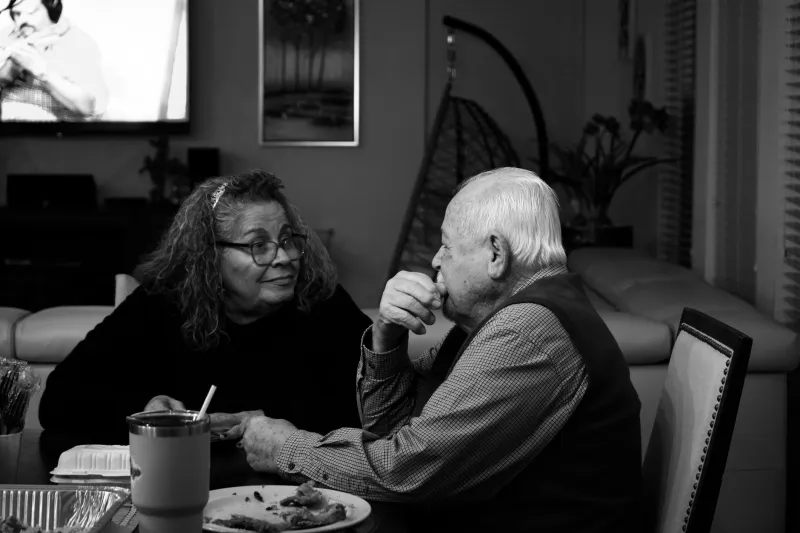
Marriage does not happen in a vacuum. It joins not only two people but, to varying degrees, two families — and families do not always greet that union with enthusiasm. Whether the disapproval stems from cultural or religious differences, concerns about socioeconomic background, or simply a personality clash that never resolved itself, hostile or controlling extended family members represent one of the most common and least discussed sources of marital strain.
For Illinois couples in this situation, the challenge is rarely simple. The partner with the difficult family member is often caught between loyalty to their spouse and deeply conditioned family ties. The other partner may feel dismissed, disrespected, or quietly resentful. Left unaddressed, these dynamics have a well-documented capacity to erode even strong marriages over time.
Understanding the Nature of the Conflict
Not all in-law conflict looks the same. Some families are openly hostile — refusing to attend the wedding, making disparaging comments about a spouse, or actively attempting to undermine the relationship. Others operate more subtly: excessive involvement in the couple's decisions, triangulating through the adult child to influence outcomes, or using guilt as a management tool.
Before developing a strategy, it helps to name the pattern clearly. Research on family systems — the framework used by many therapists in Illinois — identifies several distinct dynamics that commonly appear in troubled in-law relationships:
- Enmeshment: The in-law has difficulty accepting that their adult child has formed a primary attachment to a spouse, and continues to expect the child's primary loyalty to remain with the family of origin.
- Cultural or religious incompatibility: The in-law's disapproval is rooted in genuine differences in values, and may not be malicious even when it is harmful.
- Personality disorders or mental health challenges: In some cases, the behavior of a difficult in-law reflects a diagnosable condition — such as narcissistic or borderline personality traits — that makes boundary-setting especially difficult.
- Simple conflict of personality: Not every difficult relationship reflects pathology. Sometimes people simply do not get along, and the question becomes one of management rather than resolution.
Identifying which pattern is most relevant to your situation informs the appropriate response.
The Foundational Principle: The Couple Is the Primary Unit
One of the most important conceptual shifts for couples navigating in-law conflict is the recognition that marriage, under Illinois law and under the framework of most relationship counseling, establishes the couple as the primary family unit. This is not a rejection of extended family — it is a clarification of structure.
Practically, this means that decisions about where the couple lives, how they spend money, how they raise children, and how they observe (or do not observe) religious traditions belong to the married couple. Extended family members do not hold decision-making authority over these matters, regardless of how strongly they feel.
Establishing this principle clearly — first between the partners themselves, and then, when necessary, in communications with extended family — is the foundation of effective boundary-setting.
Communication Strategies That Actually Work
Couples therapists who work with family conflict in Illinois commonly recommend several communication principles that have demonstrated effectiveness:
Speak with one voice. When addressing in-law interference, the couple should present a unified position. Disagreements between partners should be resolved privately before any communication with extended family. A divided front invites further intervention.
Let each partner address their own family. As a general rule, conversations about boundaries are more productive when the adult child addresses their own parent directly, rather than having the spouse take the lead. This reduces the likelihood that the in-law will frame the boundary as the spouse's influence rather than their child's genuine position.
Be specific rather than global. "We need you to call before coming over" is more actionable and less inflammatory than "You always interfere with our lives." Specific behavioral requests are easier to comply with and harder to dismiss.
Acknowledge without capitulating. Phrases such as "I understand this is difficult for you" can validate an in-law's feelings without conceding the substance of the boundary. Validation is not agreement.
Legal Boundaries Worth Understanding
Illinois law provides married couples with meaningful legal autonomy that is worth understanding, particularly in situations where in-law interference crosses into more serious territory.
Married couples in Illinois have the legal right to make medical decisions for one another through healthcare power of attorney designations. Without these documents in place, a hospitalized spouse's parents could — in some circumstances — have standing to become involved in medical decisions. Ensuring that proper estate planning documents are executed, including durable powers of attorney and healthcare directives, legally formalizes the couple's authority over their own affairs.
In extreme cases involving harassment, property entry without permission, or behavior that constitutes stalking under Illinois law, legal remedies including orders of protection may be available. These situations are relatively rare, but couples facing genuinely threatening behavior from extended family members should consult with a family law attorney.
When to Involve a Therapist or Counselor
Many in-law conflicts benefit significantly from the involvement of a licensed therapist — either as a couples counselor helping the married partners develop a unified strategy, or in some cases as a mediator who facilitates a structured conversation with the extended family.
Couples counseling is particularly valuable when the in-law conflict has begun to create secondary conflict within the marriage itself. When partners are fighting with each other over how to handle the family situation, the relationship is absorbing damage that was not its to bear. A skilled therapist can help the couple disentangle their relationship from the extended family dynamic.
Family therapy — which involves the in-law directly — is an option in some cases, though it requires the in-law's willingness to participate. When it works, it can achieve resolution that unilateral boundary-setting cannot. Illinois residents can locate licensed family therapists through the Illinois Department of Financial and Professional Regulation's license lookup tool or through referrals from a primary care physician.
Protecting the Marriage Without Severing the Family
The goal, in most cases, is not estrangement. It is a functional relationship with extended family that does not come at the expense of the marriage. That balance is achievable, but it requires clarity, consistency, and — almost always — more patience than either partner initially anticipates.
For Illinois couples who feel that extended family conflict is beginning to define their marriage, the most important step is addressing it directly and early. The longer these patterns go unaddressed, the more entrenched they become — and the more damage they accumulate.