Saying 'I Do' at the Courthouse: A Practical Guide to Civil Marriage Ceremonies in Illinois
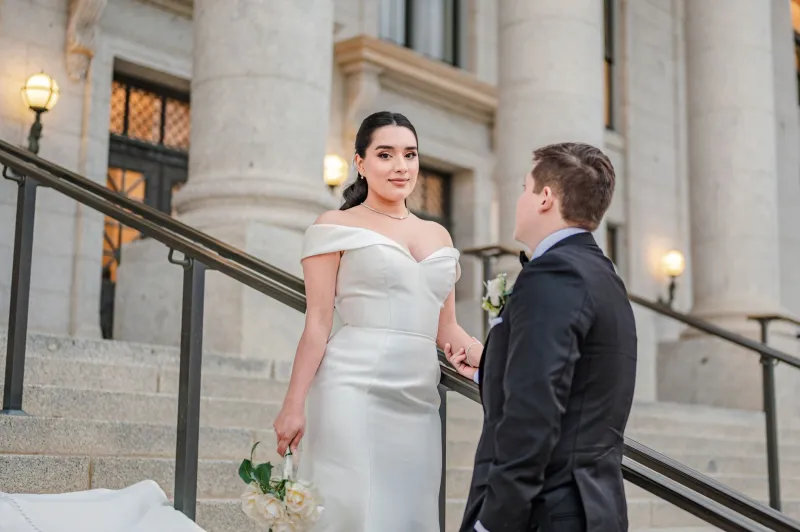
Saying 'I Do' at the Courthouse: A Practical Guide to Civil Marriage Ceremonies in Illinois
There is a quiet revolution happening in wedding culture across Illinois. In county clerk offices from Chicago's Loop to Rockford to Champaign, couples are choosing to forgo the elaborate receptions, the months of planning, and the significant expense of traditional weddings — opting instead for a simple, intimate civil ceremony that is no less legally valid and, for many couples, no less meaningful.
If you are considering a courthouse wedding in Illinois, you are in good company. And if you have questions about how the process works, what to expect, and how to make the day feel special on your own terms, this guide is for you.
Why More Illinois Couples Are Choosing Civil Ceremonies
The reasons couples choose courthouse marriages are as varied as the couples themselves. Some are motivated by financial pragmatism — the average American wedding now costs well over $30,000, a figure that gives many couples legitimate pause. Others prioritize privacy, preferring to mark the occasion without the pressure of a large guest list. Still others are second-time spouses, older couples, or partners who simply feel that a quiet ceremony better reflects who they are.
For some, the decision is logistical: a courthouse wedding can be arranged in a matter of days, which suits couples in circumstances where time is a factor — a military deployment, a medical situation, or a desire to establish legal next-of-kin status quickly.
None of these motivations is more or less valid than any other. The Illinois Marriage Guide takes the position that every couple's path to legal marriage deserves respect, and that the size or style of a ceremony says nothing about the depth of a commitment.
The Legal Steps to Getting Married in Illinois
Regardless of where or how you choose to marry, the legal process in Illinois begins in the same place: the county clerk's office.
Step 1: Obtain a Marriage License
Both partners must appear together at the county clerk's office in the county where either person resides — or, if neither is an Illinois resident, in the county where the ceremony will take place. You will need to provide:
- Valid government-issued photo identification (a driver's license, passport, or state ID)
- Your Social Security numbers (cards are not required, but the numbers must be provided)
- Information about any previous marriages, including how they ended (divorce, annulment, or death) and the approximate date
The license fee varies by county. In Cook County, for example, the fee is currently $60. Most counties in Illinois do not require a waiting period, meaning the license can be used on the same day it is issued — though it is worth confirming this with your specific county clerk's office, as local policies can differ.
Illinois marriage licenses are valid for 60 days from the date of issuance. If the ceremony does not take place within that window, you will need to obtain a new license.
Step 2: Schedule the Ceremony
In Illinois, civil marriage ceremonies can be performed by a judge, a court clerk authorized to perform marriages, or a religious or civil officiant. Many county clerk offices offer on-site civil ceremonies, though availability and scheduling procedures vary significantly by location.
In Cook County, for instance, the Circuit Court's Marriage Court in the Daley Center performs civil ceremonies on weekdays by appointment. Other counties may offer ceremonies on a walk-in basis or require advance scheduling. It is strongly recommended that couples contact their county clerk's office directly to understand the specific process and any associated fees.
Step 3: The Ceremony Itself
A civil ceremony in Illinois is brief — typically lasting only a few minutes. You will need at least one witness who is 18 years of age or older. After the ceremony, the officiant will sign the marriage license, which is then returned to the county clerk's office for recording. The state will issue an official marriage certificate, which serves as your legal proof of marriage.
The Pros and Cons: An Honest Assessment
Courthouse weddings offer genuine advantages, but they are not without trade-offs. Here is a balanced look at both sides.
Advantages:
- Significantly lower cost compared to traditional weddings
- Minimal planning required — most couples can arrange everything within a week
- Intimate and low-pressure atmosphere
- Legally identical outcome to any other form of marriage in Illinois
- Flexibility to celebrate separately, in your own way and on your own timeline
Considerations:
- County clerk offices are functional environments, not designed for romance — the setting will be utilitarian
- Guest capacity is often very limited or not accommodated at all
- The experience may feel rushed if you are not emotionally prepared for its brevity
- Some couples later wish they had created more of a commemorative moment, even a small one
Making a Courthouse Wedding Feel Like Yours
One of the most common questions couples ask is whether a civil ceremony can feel meaningful when stripped of the traditional trappings. The answer, consistently, is yes — with a little intention.
Consider these approaches:
- Dress the part. You do not need a formal gown or a tuxedo, but wearing something that feels special to you will make the photographs — and the memory — feel more significant.
- Bring the people who matter most. Even a witness or two can transform the atmosphere. A small gathering of your closest family members or friends, even in the courthouse lobby afterward, creates a sense of occasion.
- Plan a meaningful celebration afterward. Many courthouse couples follow their ceremony with a private dinner, a weekend trip, or a casual gathering at home. The legal ceremony and the celebration do not have to happen simultaneously.
- Exchange personal vows. Illinois law does not require specific vows beyond a declaration of consent. Writing even a few words to say to each other — privately, if not publicly — can add profound meaning to a brief ceremony.
A Valid Choice, Fully Supported
The Illinois Marriage Guide recognizes that marriage looks different for every couple, and that no single format holds a monopoly on meaning or commitment. Whether you are planning an elaborate celebration or a quiet morning at the county clerk's office, what matters most is that you are entering a legal and emotional partnership with clarity, honesty, and care.
If you have questions about the legal aspects of your marriage — including name changes, property rights, or estate planning implications — consulting with a qualified Illinois family law attorney is always a worthwhile step, regardless of how you choose to wed.
Your marriage begins the moment you say yes to each other. Everything else is just the setting.